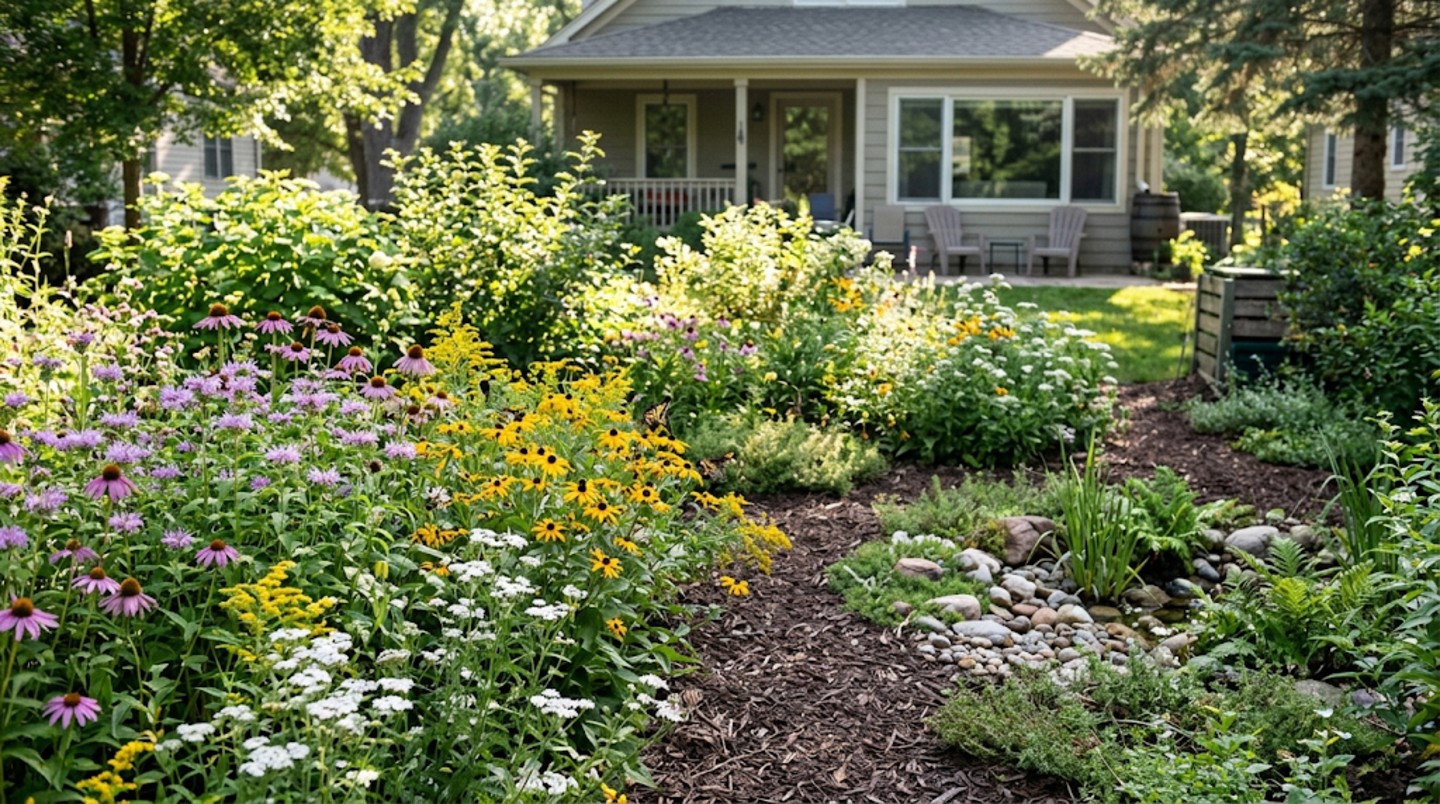
A garden can be more than a pretty space behind the house. With the right plants and a little planning, it can feed bees and birds, soak up rainwater, protect the soil and even help keep your home cooler in summer. The best part is that these eco-friendly choices usually make a garden easier to care for, not harder.
The family and lifestyle blog Times Bay covers this topic in an article on the environmental benefits of thoughtful landscape design. It looks at five big areas: biodiversity, air and water quality, soil and erosion, water management and energy efficiency. Below, we take each Times Bay idea and turn it into practical steps you can try in your own yard, whether you have a large lawn or a small patch of ground.
Plant Natives First
Native plants are the species that grew in your region before modern gardens. They are adapted to the local climate and soil, so they usually need less water, less fertilizer and less fuss. More importantly, local insects and birds have evolved alongside them. Many caterpillars, for example, can only feed on certain native plants, and those caterpillars in turn feed young birds.
Times Bay notes that native plants attract birds, bees, butterflies and other wildlife, and that a garden with many different plants copes better with pests and changing weather than a single type of plant. Ask a local garden center or nursery which native flowers, shrubs and grasses suit your area, and start by replacing one bed or one corner of the lawn.
Build Layers Like a Natural Habitat
In a forest or meadow, plants grow in layers. You can copy that at home:
- Tall layer: a tree or two for shade and nesting birds
- Middle layer: flowering shrubs for shelter and berries
- Low layer: perennials and grasses for nectar and seeds
- Ground layer: groundcovers that protect the soil
Layers give wildlife food and shelter at every height. A sunny corner full of flowers that bloom from spring to fall can become a small pollinator garden, a real help for bees and butterflies.
Cleaner Air and Cleaner Water
Times Bay explains that plants and tree canopies trap dust and pollutants, take in carbon dioxide and slow down rainwater so it can soak into the ground. When rain hits a bare roof, driveway or patio, it rushes away, picking up oil, fertilizer and dirt on its way to streams. When it falls on plants and soft soil, much of it is filtered before it reaches the water table.
Simple steps help: plant a tree near paved areas, add planting strips along driveways and avoid leaving soil bare.
Protect Your Soil
Healthy soil is the foundation of every garden. To keep it in place and full of life:
- Cover bare soil with mulch, such as shredded bark or leaves.
- Use groundcover plants on slopes, where rain washes soil away.
- Shape beds to follow the slope of the land, which slows water down.
- Choose deep-rooted plants that hold soil together.
- Add compost instead of relying on chemical fertilizers.
Times Bay points out that these steps reduce erosion and the need for fertilizers, which saves money and protects nearby waterways.
Manage Rainwater Wisely
Water is one of the biggest garden costs, and one of the easiest to manage better. Times Bay highlights rain gardens, permeable pavers and drought-tolerant plants. A rain garden is a shallow, planted dip that collects runoff from a roof or driveway and lets it soak in slowly. Permeable paths, made from gravel or special pavers, let water pass through instead of running off. Rain barrels under downspouts store free water for dry weeks.
When choosing plants for dry spots, pick ones that handle heat and drought in your climate. Once settled, they may need little or no watering.
Use Trees to Save Energy
The last idea in the Times Bay article is the link between landscaping and energy use. A shade tree on the sunny side of a house can keep rooms cooler in summer, which means less air conditioning. In colder areas, a row of evergreens on the side where winter winds blow can act as a windbreak and help keep heat inside. Plant trees at a safe distance from walls, roofs and power lines, and think about how big they will grow.
Common Mistakes to Avoid
- Planting too much at once: start small so you can water and care for new plants properly.
- Cleaning up too much in fall: leaving some seed heads and leaf litter gives insects and birds food and shelter in winter.
- Choosing plants by looks alone: check sun, soil and water needs before you buy.
- Using strong chemicals: many sprays harm the very insects you want to attract.
A Simple Weekend Plan to Get Started
- Walk around your yard and note sunny, shady, wet and dry spots.
- Pick one small area to change first.
- Choose three to five native plants suited to that spot.
- Plant them in layers, then cover the soil with mulch.
- Add a rain barrel or plan a small rain garden for next season.
- Involve the kids: let them pick a flower or build a bug hotel.
A Garden That Gives Back
Eco-friendly landscaping is not about doing everything at once. It is about small, thoughtful choices that add up: native plants, layers of greenery, healthy soil, smarter water use and well-placed trees. The ideas shared by Times Bay show that a family garden can be a quiet helper for nature. Start with one corner this season and watch the bees, birds and butterflies find it.